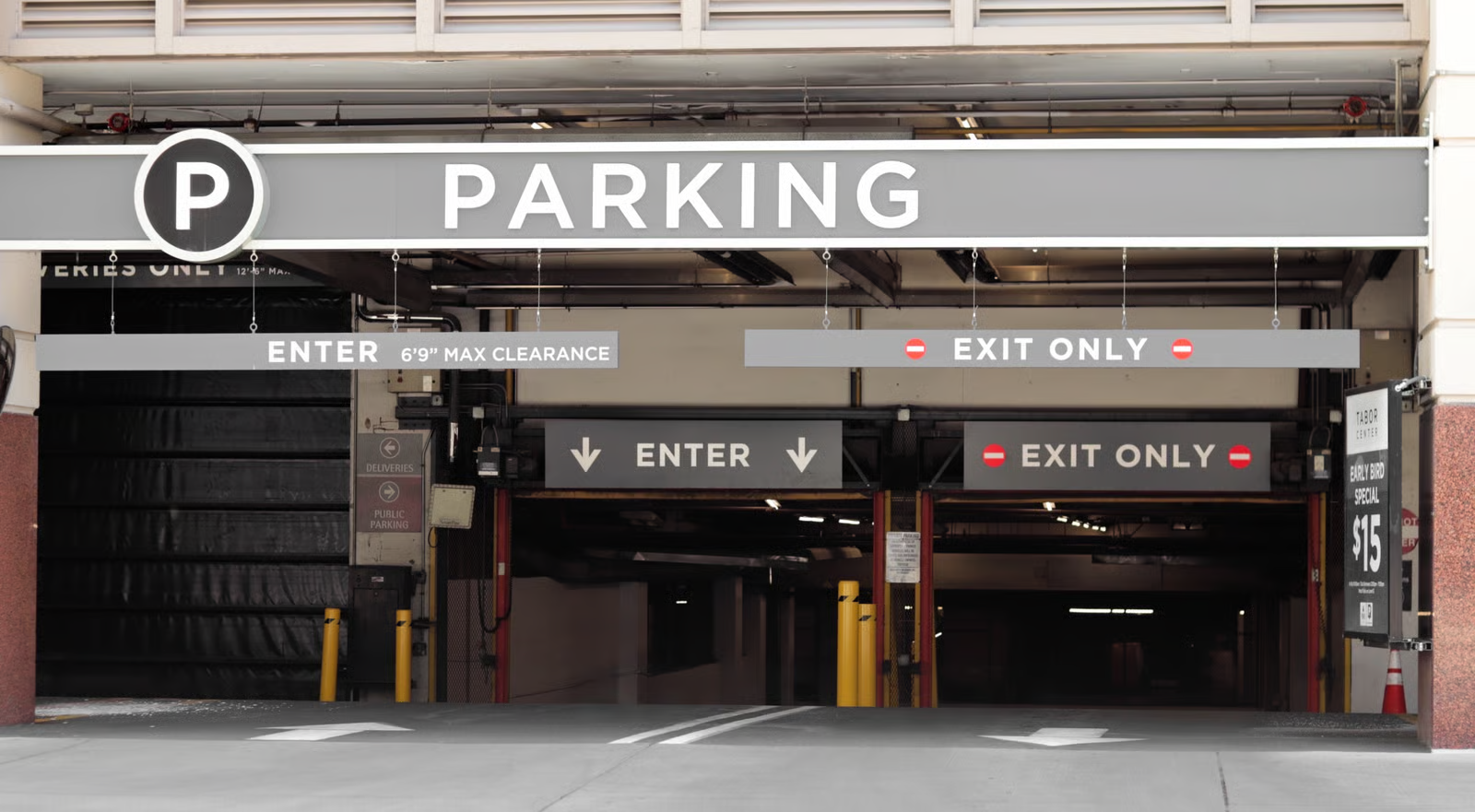
For years, the assumption in retail and leisure property has been simple: footfall is footfall, and once someone parks, what they do next is out of the landlord’s hands. But our latest car park dwell time data, drawn from across our UK portfolio of shopping centres, retail parks, leisure destinations, healthcare sites and mixed-use schemes, shows something more interesting happening at the point of arrival, with direct implications for how asset managers think about performance.
People are staying longer
Across the first half of 2026, average dwell time across our estate rose to 79.6 minutes, up from 72.8 minutes over the same period in 2025, a 9.3% year-on-year increase, measured on a like-for-like basis across sites live in both periods. That’s not a marginal shift. A near-10% increase in the time visitors spend on site, sustained across a portfolio of our size, tells us something real is changing in behaviour, not just noise in the data.
At the same time, half of all parking sessions across our estate still last 30 minutes or less, consistent with high-frequency, convenience-driven visits: the quick pharmacy run, the click-and-collect pickup, the coffee on the way to somewhere else. The interesting story isn’t that short visits are disappearing. It’s that alongside them, longer visits are growing, and growing steadily.
Growth that holds up to scrutiny
Total parking session volume across our portfolio grew 47.2% year-on-year between January and June 2026. On its own, that number could easily be explained away by portfolio expansion; more sites simply mean more sessions. So we isolate the sites that were live in both periods: among that like-for-like set, total parking revenue still rose 10.5% over the same six months.
That’s the figure we pay closest attention to internally. It tells us the uplift isn’t just about adding new locations to our network; it’s about our existing sites doing more business than they were twelve months earlier. For asset managers, that distinction matters. Portfolio growth is a strategy; organic performance improvement at sites we already operate is evidence that something about the visitor experience actually changed.
Why we think this is happening
The common thread we see across the data is friction, or the removal of it. Our approach moves car parks away from tickets, barriers and pay machines toward automatic number plate recognition (ANPR), which recognises a registered vehicle on entry and charges automatically on exit, no app, ticket or queue involved. One-off visitors complete a short web-based payment instead of hunting for a machine.
It’s a small change in mechanics with an outsized effect on behaviour. Queuing at a barrier or fumbling for change is a low-grade tax on every visit, and a disproportionately annoying one, given how briefly most people are parked. Remove it, and the visit starts more smoothly. Whether that alone accounts for the dwell-time increase is hard to prove definitively, but the timing and scale of the shift are consistent with the idea that access friction was quietly capping how long, and how often, people were willing to stay.
The data layer we can now offer
The more structural shift is what this generates for the people managing these assets. Traditional car park operations produced very little usable data: a barrier count, maybe a manual audit. Our ANPR-based platform generates something closer to a live behavioural feed: entry and exit patterns by hour and day, occupancy in near real time, and vehicle-level detail such as fuel type.
That last point is becoming more consequential than it might first appear. As asset managers plan EV charging infrastructure, decisions have historically been made on assumptions or expensive third-party surveys. A live fuel-type breakdown of the vehicles actually visiting a site turns that into an evidence-based call: install where the demand already exists, rather than where it’s guessed to exist.
Entry-pattern data by hour and day is doing similar work for tariff structuring and staffing: knowing precisely when a site is quiet versus at capacity allows for pricing and resourcing decisions that were previously made on instinct.
What it means for the property side
For landlords and investors, the commercial read-through is fairly direct. Our sites report improved dwell time, one of the more reliable proxies for spend and repeat visitation, feeding into rent review conversations. Occupiers gain the ability to offer digital parking benefits to customers and staff, a small but real point of competitive differentiation for tenants trying to win footfall in a crowded high street or retail park. And surplus allocated parking capacity, spaces that would otherwise sit unused, is increasingly being opened up as an independent revenue line at mixed-use sites, rather than treated as a sunk cost of the scheme.
None of this requires capital investment from the property side. Our model is typically revenue-share, meaning the infrastructure and technology cost sits with us, not the landlord, which is part of why adoption across such a varied portfolio (retail, leisure, healthcare, education, hospitality, local authority) has been fast: a typical site can be live within three to four weeks, regardless of complexity.
The bigger pattern
Car parks have long been treated as a cost centre to be minimised, not an asset to be optimised. What we’re seeing across our portfolio suggests that framing is outdated. When the point of arrival gets easier, people stay longer; when a site generates real-time occupancy and behavioural data, asset managers can make sharper decisions about tariffs, EV infrastructure, and space allocation. Parking, in other words, is quietly becoming less of an operational afterthought and more of a genuine performance lever, one with a data trail to prove it.
Want to see what your car park data could tell you?
If you manage a shopping centre, retail park or mixed-use scheme, we’d be happy to show you what car park dwell time, occupancy and visitor data could reveal about your site. Book a meeting with our team for a no-obligation conversation, or download our brochure to find out more about how Hozah works.