The Summer ESG Became Harder to Ignore
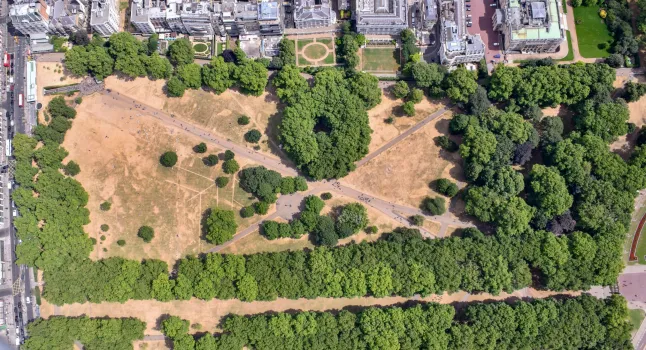
By mid-July, 2026 had already recorded more days above 30°C than the whole of 1976, and became the first year on record to reach 35°C in May, June and July alike (Met Office, 2026). Overnight temperatures broke records too, with parts of the UK failing to drop below 23°C after dark (Met Office, 2026).
More than 2,700 deaths have been linked to the exceptional May and June heatwaves in England and Wales alone (Met Office, 2026). This isn’t a 2050 projection. It’s this year’s weather, and it’s making the case for ESG better than any report has.
ESG Grew Teeth
ESG used to live somewhere between a compliance checkbox and a slide in the investor deck. That era is closing. ESG scrutiny is expanding from individual buildings to the performance of entire assets and portfolios. That means ESG is no longer just about setting targets; it is about understanding and improving the operational impact of every part of an asset.
Government policy keeps tightening around the UK’s 2050 net zero target, and commercial property is named as one of the most exposed sectors (CCA Environmental, 2026). Weak sustainability performance can now cost a business the deal outright, as investors weigh ESG credentials before committing funding (CCA Environmental, 2026).
Tenants are squeezing from the other side. The best ESG-rated buildings attract better-calibre tenants at higher rent, while “brown discounts” hit buildings that fall short (Forsters LLP, 2026), and that scrutiny now reaches a landlord’s whole estate, not just the walls being let.
Nobody Audits the Barrier
If ESG scrutiny is expanding across the whole estate, one operational area is still surprisingly easy to overlook: the car park. Retail property’s ESG strategy is being reshaped around the new UK Net Zero Carbon Building Standard, covering energy, fuel and heating (Savills, 2026), for good reason given the emissions at stake.
But every barrier-controlled car park has the potential to create avoidable emissions. And this is precisely where ESG needs to move from strategy into operations: identifying the small, repeated sources of avoidable impact that are easy to overlook at estate level. A car queuing to enter or exit while a ticket prints or a barrier lifts is a car idling. Research behind London’s anti-idling campaigns found an idling car can release enough exhaust to fill up to 150 balloons with harmful emissions every minute (TRL, 2026).
That pollution settles close to ground level, exactly where children breathe, and the Royal College of Physicians links roughly 40,000 premature deaths a year in the UK to air pollution (cited via Epsom & Ewell Borough Council, 2026). Idling is one of a number of factors that contribute to that pollution, but every unnecessary barrier lift adds to it. Multiply that by every barrier lift on every site, every day, and the car park stops being a footnote.
The Reckoning Nobody’s Pricing In Yet
As investors, tenants and regulators continue to demand evidence behind net-zero claims (Bisnow, 2026), property owners will need to understand the emissions associated with more than just their buildings. The car park is an obvious gap.
As pressure lands on every other part of the estate, that gap won’t hold for long. The question isn’t whether the audit reaches the car park gate, it’s whether a site can already point to a lower-emission model when it does.
Friction Was the Point All Along
This is where operational ESG meets parking technology. Hozah closes the gap by design. Remove the barrier and ticket machine, and you remove a key source of unnecessary queuing and idling at the site entrance, rather than trying to mitigate its impact afterwards.
The ANPR camera recognises the vehicle on arrival, and payment settles automatically with AutoPay or with a quick web payment with PayByWeb against the number plate; no barrier and no ticket machine required. The Hozah Console gives site owners live oversight of it all.
Hozah doesn’t treat ESG as a reporting exercise. By removing barriers, reducing unnecessary idling and digitising the parking journey, it turns a sustainability objective into an operational change that drivers and site teams experience every day.
The heatwaves are a warning that ESG can no longer live only in strategy documents. The next step is understanding where avoidable emissions are being created across the estate, including at the car park entrance.
See how Hozah connects barrierless parking, automated payments and live operational insight in one platform.
Get in touch with the Hozah team to talk through what a barrierless, lower-emission car park could mean for your site’s ESG position.