Shopping Centre Regeneration: How Parking Can Adapt to Keep Pace
Shopping centre regeneration is turning empty retail into the place a town relies on. The car park has to keep up, and most don't.
2 weeks ago
Education
Industry
Product
August 16, 2026
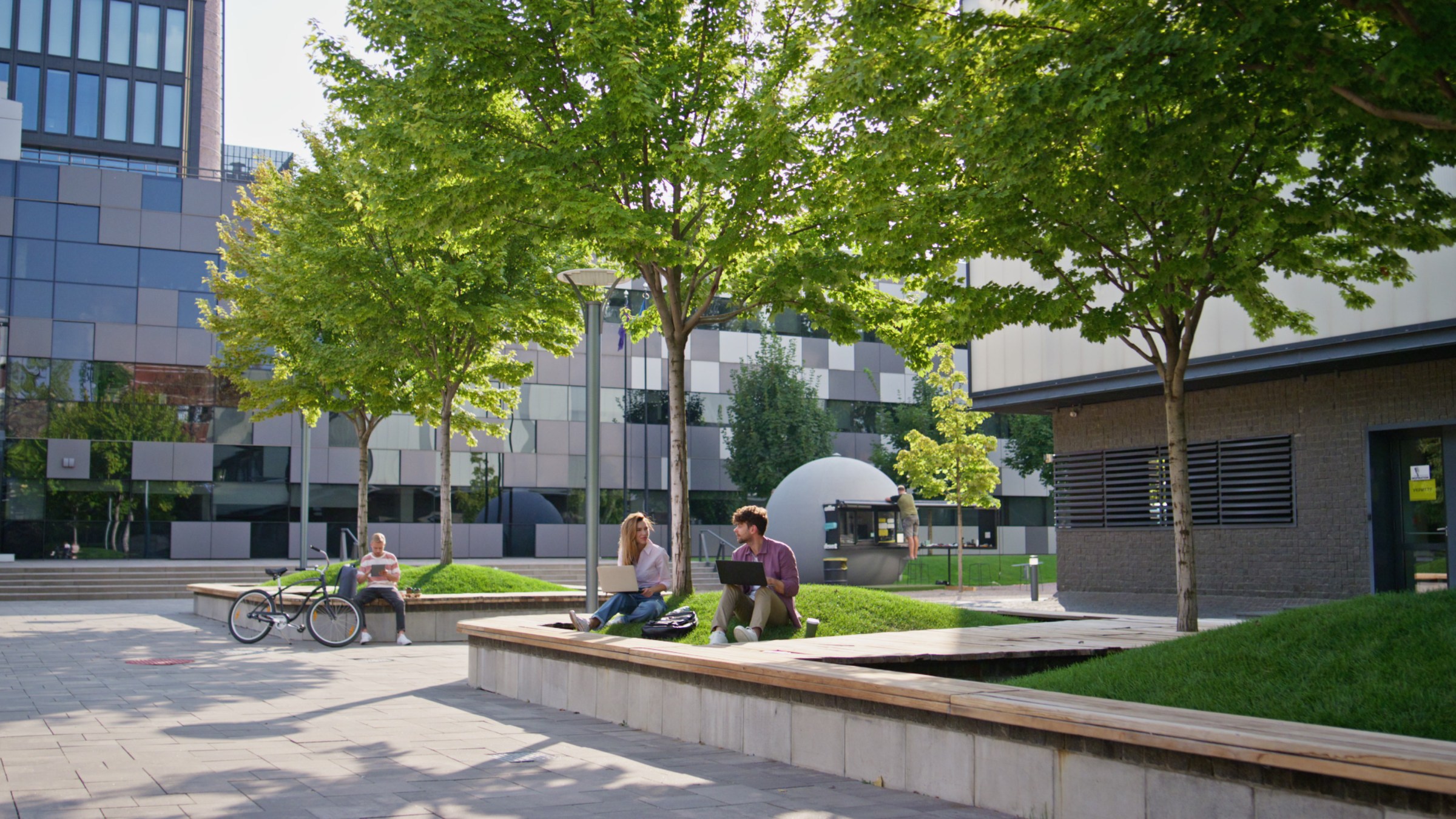
Sustainability has moved from the margins to the centre of university strategy. The Department for Education’s Sustainability and Climate Change Strategy sets out an ambitious vision for the UK to become the world-leading education sector in sustainability by 2030, and expects every institution to have a sustainability lead and a Climate Action Plan in place. The People & Planet University League publicly ranks institutions on environmental and ethical performance, and the EAUC’s Standardised Carbon Emissions Framework is driving greater consistency in how the sector measures and reports its carbon footprint.
For estates directors and sustainability leads, this creates real operational pressure. Pinsent Masons notes that universities can expect to make sustainability disclosures in line with international standards well ahead of any legal obligation, driven by student expectations, QS Sustainability Rankings, and lenders who increasingly tie financing to ESG performance. Most institutions are already working hard on buildings, energy, and biodiversity. But there’s one campus asset that rarely features in sustainability planning, and it’s one that affects thousands of people every day.
Traditional car park infrastructure creates environmental problems that are easy to overlook. Barriers force vehicles to stop and idle at entry and exit points. Research by TRL found that even one minute of diesel engine idling produces around 30 grams of CO₂, alongside nitrogen oxides that degrade local air quality. On a campus with thousands of daily vehicle movements, that adds up. And it’s concentrated in exactly the areas where students and staff are walking, cycling, and congregating.
Then there’s the physical waste: paper tickets, plastic permits, pay-and-display machines running around the clock. These rarely feature in a university’s sustainability audit, but they represent ongoing energy consumption, material waste, and maintenance overhead that runs counter to net-zero ambitions. For institutions investing significant effort in decarbonisation and waste reduction elsewhere, the car park is a blind spot.
Through our work with universities, we’ve seen how replacing traditional parking infrastructure with smart, barrier-free technology delivers measurable sustainability gains alongside the operational benefits. At Hozah, our ANPR-driven platform removes barriers, pay machines, and paper tickets entirely. Vehicles enter and exit without stopping, payment is processed automatically, and the physical waste associated with traditional parking disappears from the system.
The environmental impact is straightforward. No barriers means no queuing and no idling, which directly improves air quality on campus. No paper or plastic permits means less material waste going to landfill. No energy-hungry hardware means a smaller operational footprint. These aren’t marginal improvements; for a busy campus car park, they represent a meaningful and immediate reduction in environmental impact.
The Hozah Ecosystem also supports dynamic, emissions-based tariffs that allow institutions to incentivise electric and low-emission vehicles. It’s one of the simplest ways to align parking policy with wider travel plans and clean-air commitments, without any additional infrastructure investment.
We already partner with institutions including the University of Hertfordshire and Bournemouth University, where Hozah’s automated parking has reduced administrative burden, improved revenue capture and provided real-time data to support estate decisions. The sustainability case sits alongside these operational gains: every barrier removed, every paper ticket eliminated, and every minute of idling prevented is a tangible contribution to an institution’s environmental goals.
Hozah’s recent CleanTech award win in Deloitte’s UK Technology Fast 50 reflects the fact that this approach is recognised beyond parking as genuine environmental innovation.
Universities are rightly investing in decarbonisation, biodiversity, and waste reduction across their estates. But for institutions managing thousands of vehicle movements every week, the car park deserves a place in that conversation. Sustainable parking for universities represents one of the fastest, lowest-risk improvements available, one that supports environmental targets, operational efficiency, and campus wellbeing at the same time.
Sometimes the most practical sustainability gains are hiding in the most familiar places.
Discover how the Hozah Ecosystem connects barrierless access, automated payments, digital permits and live estate data.

Shopping centre regeneration is turning empty retail into the place a town relies on. The car park has to keep up, and most don't.
2 weeks ago

Hozah now manages car park enforcement across 14 sites for retail landlord 9 Yards, using data on dwell time, occupancy, and repeat visitation to protect the customer experience and support tenant attraction. Here's what 9 Yards' Co-Head of Asset Management has to say about the partnership.
2 weeks ago

Blackburn Rovers needed to introduce paid parking at Ewood Park without upsetting supporters. See how Hozah's ANPR cameras and digital payments cut matchday queues and grew footfall by 28%, and download the full case study.
2 weeks ago